
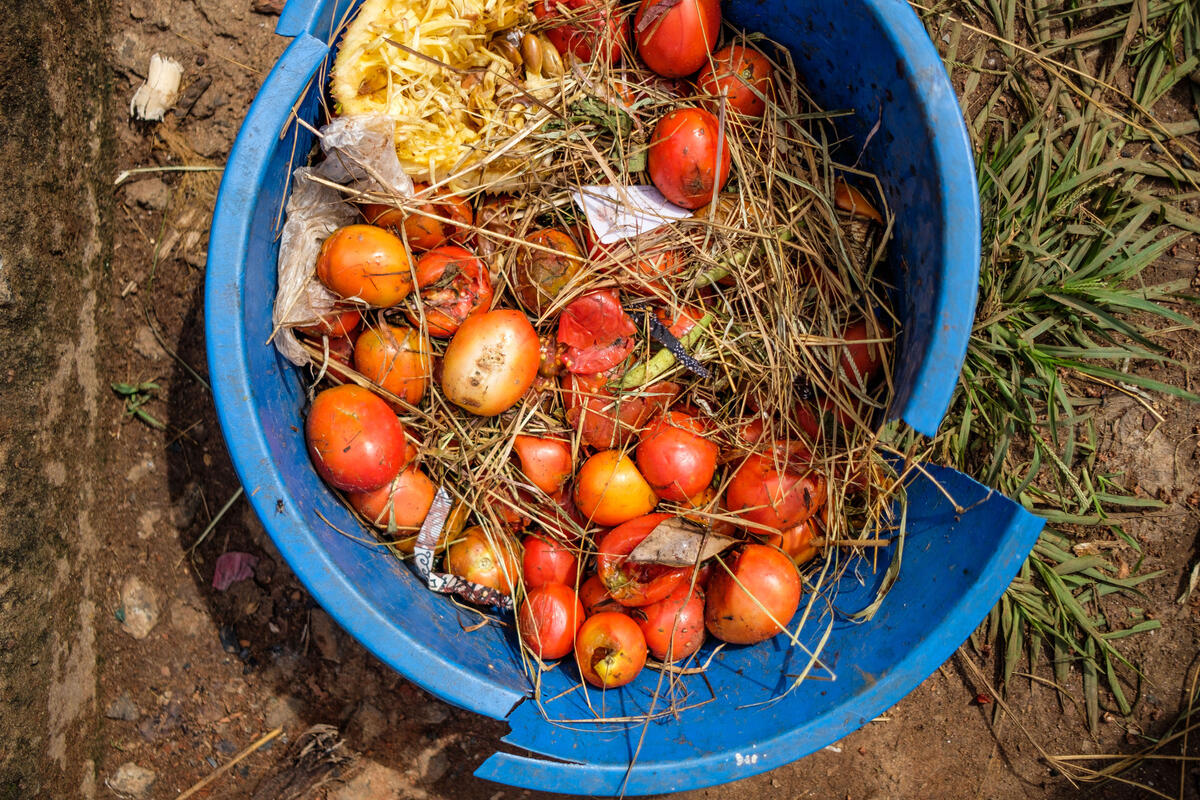
Reducing food loss and waste has transformative potential for agrifood systems, as saving food from being lost or wasted also saves nutrients, natural resources and money, while helping ease pressure on forests, the Director-General of the Food and Agriculture Organization of the United Nations (FAO), QU Dongyu, said during a joint FAO-UN Environment Programme event held in observance of the seventh International Day of Awareness of Food Loss and Waste.
13.4 percent of food produced globally is lost after harvest and before reaching retail, while 19 percent of food available to consumers is wasted at retail, in food service and in households. Beyond the food itself, these losses represent a considerable waste of the resources used to produce it. When lost or wasted food decomposes, particularly under anaerobic conditions in landfills, it also generates methane (CH₄), a potent short-lived greenhouse gas, further increasing the climate footprint of food loss and waste.
FAO has estimated that approximately 1.4 billion hectares of land are used to produce food that is ultimately never consumed. With agricultural expansion remaining the leading driver of deforestation globally, reducing food loss and waste could help make better use of existing agricultural land and ease pressure on forests.
"To protect forests, we must transform agrifood systems; to transform agrifood systems, we must reduce food loss and waste; and by reducing food loss and waste, we help safeguard forests," Qu said.
Food loss and waste also generate around 10 percent of global greenhouse gas emissions. Addressing the problem could improve the availability of nutritious food, particularly fruits and vegetables, which experience the highest rates of food loss.
Despite international commitments, the world has made no apparent progress in reducing food losses since 2015 and remains far off track from achieving Sustainable Development Goal target 12.3, which calls for halving per capita global food waste at retail and consumer levels and reducing food losses along production and supply chains by 2030.
FAO is working with Members and partners to turn this trajectory around by improving measurement, strengthening policies and scaling up practical solutions that keep more food in the system, support access to healthy diets and reduce pressure on natural resources.


